
Introduction
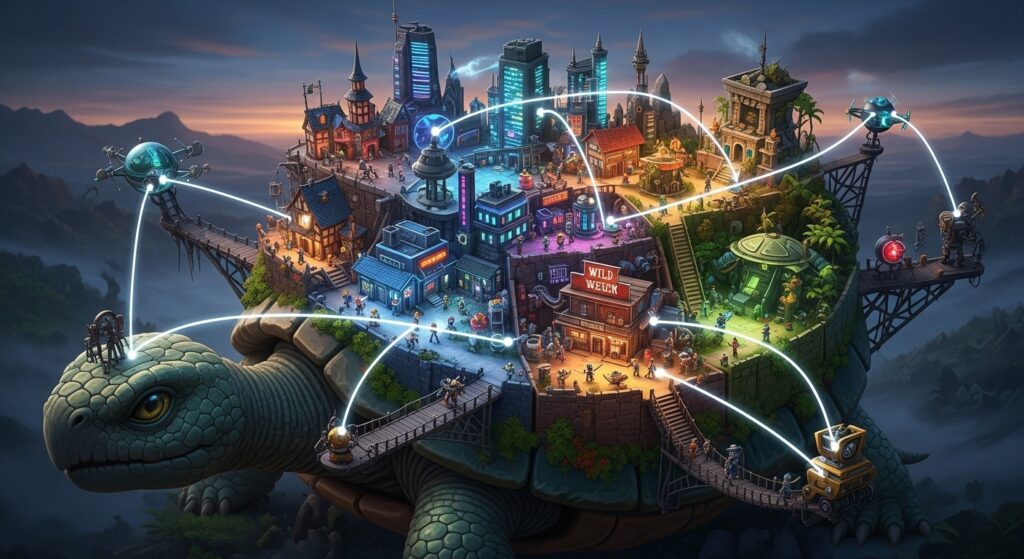
Storytelling has always been at the heart of great video games. In the earliest days of gaming, narratives were simple and linear, often guiding players from point A to point B with little deviation. But as technology evolved and game design matured, developers began experimenting with nonlinear storytelling—a structure where player choices, exploration, and decisions could influence how the story unfolds.
Nonlinear storylines create a sense of agency, making players feel that their actions truly matter. These games can branch into multiple endings, feature divergent dialogue trees, or allow players to tackle challenges in varied orders. In essence, they transform the act of playing from following a script to co-writing the story alongside the game’s creators.
In this blog, we will explore the best games with nonlinear storylines, analyzing what makes them so impactful, how they changed the landscape of gaming, and why players continue to gravitate toward them.
What Makes a Game Nonlinear?
Before diving into examples, it is important to define what “nonlinear” means in gaming. A nonlinear storyline is not just about open-world exploration but about narrative flexibility. Key features include:
- Branching Narratives: Player decisions result in different story paths.
- Multiple Endings: Outcomes vary depending on choices made during the game.
- Moral Dilemmas: Players must decide between conflicting values, shaping character arcs.
- Replayability: Each playthrough feels unique because of diverging possibilities.
- Freedom of Approach: Players decide how to tackle missions or in what order events occur.
These elements turn games into interactive storytelling platforms rather than passive entertainment.
Classic Examples of Nonlinear Storytelling
The Witcher 3: Wild Hunt
CD Projekt Red’s masterpiece is often hailed as one of the greatest role-playing games ever made, largely because of its narrative depth. In The Witcher 3, players step into the boots of Geralt of Rivia, a monster hunter navigating a world plagued by war, politics, and personal quests.
The nonlinear nature comes from dialogue choices, moral decisions, and branching storylines that ripple across the game. Something as small as sparing or killing a character can influence political outcomes hours later. With multiple endings and varied regional consequences, the game rewards careful decision-making and exploration.
Mass Effect Trilogy
BioWare’s Mass Effect series is one of the most ambitious nonlinear narratives in gaming. Players, as Commander Shepard, shape galactic politics, alliances, and personal relationships through choices. What makes the series particularly notable is how decisions carry over across the trilogy.
A choice made in the first game can affect events in the third, giving players a sense of long-term responsibility. While the ending sparked debate, the journey itself showcases the immense potential of nonlinear storytelling.
Fallout: New Vegas
Fallout: New Vegas is another benchmark for nonlinear design. Set in a post-apocalyptic Mojave desert, the game offers players freedom to side with various factions, pursue independent power, or create chaos.
Every choice influences the fate of the region, leading to drastically different endings. The player can shape the political future of New Vegas, turning it into a democracy, a dictatorship, or leaving it to anarchy. This freedom ensures no two playthroughs feel the same.
Narrative-Driven Adventures
Detroit: Become Human
Quantic Dream’s Detroit: Become Human is a cinematic experience that thrives on nonlinear storytelling. The game follows three android protagonists navigating a society on the brink of revolution.
Every choice matters—whether it is deciding how to interact with humans, sparing or killing enemies, or choosing how to lead a rebellion. The game’s flowcharts show players just how many paths could have been taken, highlighting the immense complexity of its branching structure.
Heavy Rain
Also developed by Quantic Dream, Heavy Rain was one of the first mainstream games to popularize interactive drama. The narrative follows four characters trying to solve the mystery of the Origami Killer.
What makes the game nonlinear is its commitment to player choice. Characters can die permanently, altering the storyline significantly. With multiple possible endings, players feel immense weight behind every decision.
Until Dawn
Supermassive Games’ Until Dawn brings nonlinear storytelling to the horror genre. A group of friends trapped in a snowy mountain lodge must survive supernatural and human threats.
The game uses a “butterfly effect” system where small choices—like whether to comfort a friend or explore a hallway—can determine who lives or dies. By the end, players create a unique horror movie tailored to their decisions.
Open-World Games with Nonlinear Paths
The Elder Scrolls V: Skyrim
Bethesda’s Skyrim remains a landmark in nonlinear storytelling. Players are free to ignore the main quest entirely and instead forge their own path as a thief, mage, assassin, or adventurer.
The nonlinear aspect comes not just from branching quests but from how the world responds to the player’s choices. Aligning with certain factions locks out others, and moral decisions alter the course of events. With countless possible playstyles and outcomes, Skyrim embodies narrative freedom.
Red Dead Redemption 2
Rockstar’s Red Dead Redemption 2 is another example of nonlinear brilliance. While it has a central story, the choices players make as Arthur Morgan influence relationships, honor levels, and even the game’s ending.
The nonlinear design allows players to shape Arthur as a ruthless outlaw or a compassionate anti-hero. This moral ambiguity, combined with the game’s cinematic storytelling, creates one of the most emotional experiences in gaming.
Indie Innovations in Nonlinear Storytelling
Undertale
Toby Fox’s Undertale is a perfect example of how indie developers push narrative boundaries. The game allows players to complete it without killing a single enemy, encouraging pacifism. Alternatively, they can slaughter everyone, leading to darker outcomes.
The nonlinear storytelling lies in how the game remembers player actions—even across multiple playthroughs. Choices matter not just for endings but for the way characters perceive and interact with the player.
Disco Elysium
Disco Elysium is a role-playing game that relies heavily on dialogue and decision-making rather than combat. Players embody a troubled detective with amnesia, solving a murder in a politically divided city.
The nonlinear storytelling emerges through branching dialogue trees, skill checks, and moral decisions. Players can approach the mystery in countless ways, shaping both the story and the protagonist’s personality.
Outer Wilds
Outer Wilds combines exploration with nonlinear storytelling in a unique time-loop structure. Players uncover the mysteries of a dying solar system by piecing together knowledge across multiple cycles.
The narrative is not spoon-fed but discovered organically, allowing players to piece together events in their own order. This nonlinear approach turns exploration itself into the storytelling engine.
The Role of Player Choice in Nonlinear Games
The power of nonlinear storytelling lies in its ability to give players agency. Unlike movies or books, where the audience passively observes, games allow individuals to decide how the story unfolds. This agency creates a personal connection to characters, worlds, and outcomes.
For instance, when a beloved companion dies because of a choice the player made, the emotional impact is far greater than if it were predetermined. Similarly, when the player achieves a satisfying ending after making difficult decisions, the sense of accomplishment feels uniquely personal.
Challenges of Nonlinear Storytelling
While nonlinear games are beloved, they also present challenges for developers:
- Complexity: Writing and programming branching storylines require massive resources.
- Balance: Ensuring that all story paths feel equally rewarding can be difficult.
- Continuity: Choices must feel meaningful, not superficial. Players can easily detect when a game pretends to offer freedom but funnels everyone into the same conclusion.
- Replay Fatigue: While replayability is a strength, not all players are willing to replay lengthy games just to see different outcomes.
Despite these challenges, developers continue to refine techniques to make nonlinear storytelling more engaging and accessible.
Why Nonlinear Games Resonate
Nonlinear storylines resonate with players because they mimic real life. Life is not a straight path; it is full of choices, consequences, and unforeseen outcomes. By reflecting this, games feel more immersive, authentic, and emotionally impactful.
These games also foster community discussions. Players love sharing experiences, debating choices, and comparing endings. The diversity of outcomes makes the gaming experience feel communal, as no two players’ journeys are exactly the same.
Conclusion
Nonlinear storytelling has become one of the most exciting frontiers in gaming. Titles like The Witcher 3, Mass Effect, Detroit: Become Human, and Undertale prove that games are more than interactive entertainment—they are collaborative works of art where players shape narratives through their choices.
As technology continues to evolve, the potential for nonlinear games will only expand. Artificial intelligence, procedural generation, and more advanced dialogue systems promise even richer and more dynamic storylines.
In the end, nonlinear games succeed because they let players do more than play a story—they let them live it. Every decision, every path, and every ending belongs uniquely to the player. That sense of ownership is what makes nonlinear storytelling not just a feature but a defining characteristic of some of the best games ever made.
