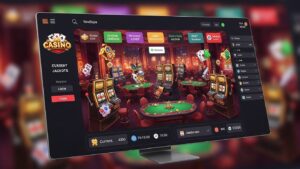
The world of entertainment has undergone a significant transformation in the past few decades, with the rapid development of digital technology opening up entirely new ways for people to engage with leisure activities. One of the most exciting and rapidly growing sectors in this space is iGaming – a term used to describe online gambling and gaming activities that allow players to place bets, play casino games, and participate in other forms of virtual gaming, all from the comfort of their homes.
The expansion of iGaming has been nothing short of extraordinary. What started as a niche market has now become a global industry worth billions of dollars, offering everything from traditional casino games like poker and blackjack to innovative online sports betting, live dealer experiences, and even virtual reality casinos. But how did iGaming rise to prominence, and what factors have contributed to its success?
In this blog post, we will explore the development of iGaming, its impact on the gambling industry, the role of technology in its evolution, and where the industry is headed in the coming years. Whether you’re a seasoned online gamer or someone curious about the iGaming world, this guide will provide a comprehensive look into this exciting and dynamic field.
The Origins of iGaming: The Birth of Online Casinos
The Early Days of Online Gambling
The roots of iGaming can be traced back to the mid-1990s when the internet began to emerge as a widely accessible platform for communication, information, and entertainment. With the rise of the World Wide Web, entrepreneurs and technology developers saw the potential to bring gambling and gaming to the digital space.
The first major milestone in the iGaming industry came in 1994, when Antigua and Barbuda passed the Free Trade & Processing Act, which allowed online gambling to be licensed in the Caribbean island nation. This legislative change laid the foundation for online casinos to emerge, and within a year, the first legitimate online casino went live. InterCasino, which launched in 1996, was one of the pioneers of this new frontier in gambling, offering players a variety of traditional casino games such as blackjack, roulette, and slots.
As internet speeds improved, more online casinos began to open their virtual doors, catering to an increasingly global audience. The convenience of being able to gamble from the comfort of one’s own home quickly made online casinos popular among players who previously had to travel to physical casinos.
The Development of Online Poker
In addition to the success of online casinos, online poker began to gain massive traction in the early 2000s. The launch of PokerStars in 2001 and Full Tilt Poker in 2004 marked the beginning of the online poker boom, which would culminate in massive global tournaments like the World Series of Poker (WSOP) moving online.
The appeal of online poker lay in its simplicity, accessibility, and the ability to play at any time of day or night. Players from all over the world could now compete against each other in poker rooms, with low-stakes games catering to beginners and high-stakes tables attracting serious professional players. The poker boom, particularly in the mid-2000s, was further fueled by televised tournaments, such as the WPT (World Poker Tour), which showcased the excitement and strategy of the game to a broad audience.
The Rise of Mobile iGaming: Gaming on the Go
Smartphones and Mobile Casinos
The next major development in the iGaming sector came with the widespread adoption of smartphones in the late 2000s and early 2010s. As smartphones became more powerful and capable of running sophisticated apps, it was only a matter of time before online casinos and betting platforms began to transition to mobile devices.
Mobile gaming revolutionized the iGaming world by allowing players to enjoy their favorite casino games, poker hands, or sports betting activities while on the go. With the launch of dedicated mobile apps for iGaming platforms, users could now access their accounts, deposit and withdraw money, and play games from virtually anywhere – be it on a commute, during a lunch break, or while relaxing at home.
This shift to mobile also led to the rise of mobile-first online casinos. These platforms were designed specifically for smartphones and tablets, offering a sleek and optimized user interface for smaller screens. Mobile gaming has since become a dominant trend in the iGaming sector, with most major operators now offering apps or responsive websites that are compatible with all types of devices.
The Growth of Sports Betting and Live Betting
Another significant trend in the iGaming industry has been the explosion of online sports betting. Thanks to the rise of mobile apps and the constant availability of sports events, sports betting has become a core component of iGaming. Players can now place bets on virtually any sport, from football and basketball to horse racing, esports, and even niche markets like politics or reality TV shows.
The introduction of live betting, also known as in-play betting, has further enhanced the sports gambling experience. Live betting allows players to place wagers during the course of a game or event, with odds that change dynamically based on the unfolding action. This real-time betting experience has made sports gambling more exciting and engaging, attracting a new generation of bettors who enjoy the thrill of betting as the action happens.
Technological Advancements in iGaming
The Role of Artificial Intelligence and Data Analytics
As the iGaming industry continues to grow, technology has played a central role in shaping its evolution. One of the most exciting innovations has been the use of artificial intelligence (AI) and data analytics to enhance the player experience and improve the operations of iGaming platforms.
AI is being used in a variety of ways, from powering sophisticated algorithms that recommend games to players based on their preferences to improving customer service with chatbots that can handle a wide range of inquiries. Additionally, data analytics is being employed to monitor player behavior, optimize marketing campaigns, and detect fraudulent activity, ensuring that online casinos and sports betting platforms operate securely and fairly.
Virtual Reality and Augmented Reality in iGaming
Another cutting-edge technology that is starting to make waves in iGaming is virtual reality (VR). With VR headsets like the Oculus Rift and PlayStation VR, players can step into a fully immersive 3D casino environment, where they can interact with other players and dealers in real-time. These virtual casinos offer a much more lifelike and engaging experience compared to traditional online casinos.
Similarly, augmented reality (AR) is being used to enhance mobile gaming experiences. AR allows for the integration of digital elements into the real world, creating a more interactive and dynamic gaming environment. Imagine playing blackjack on your kitchen table, where cards are dealt virtually, but the experience feels tangible and real.
Blockchain Technology and Cryptocurrencies
In recent years, blockchain technology and cryptocurrencies like Bitcoin and Ethereum have begun to play a role in the iGaming industry. Blockchain offers several advantages for online gaming, including enhanced transparency, security, and fairness. Transactions made with cryptocurrencies are typically faster, cheaper, and more secure than traditional payment methods, and many online casinos now accept Bitcoin and other digital currencies for deposits and withdrawals.
Blockchain also enables the creation of decentralized gaming platforms, where players can bet on games without relying on a centralized operator. These platforms are powered by smart contracts, which ensure fairness and transparency by automating the resolution of bets.
The Legal Landscape of iGaming
The Global Regulatory Environment
While iGaming has become a global phenomenon, the legal landscape for online gambling varies widely from country to country. Some regions, like Europe, have established well-regulated frameworks for iGaming, where online casinos and sports betting platforms are licensed and monitored to ensure fairness and player protection. The UK Gambling Commission and the Malta Gaming Authority are two of the most prominent regulatory bodies in Europe, setting high standards for the industry.
In contrast, other regions, such as the United States, have more fragmented and complex laws regarding online gambling. While some states have legalized online sports betting and casino games, others still prohibit any form of online gambling. This inconsistency in regulations presents challenges for iGaming operators, who must navigate a constantly changing legal environment.
Responsible Gambling and Player Protection
As the popularity of iGaming grows, so too does the importance of ensuring that players engage in responsible gambling. Many online casinos and sports betting platforms have implemented measures to promote responsible play, including setting deposit limits, self-exclusion options, and providing access to support organizations for problem gamblers.
Regulatory bodies have also introduced strict requirements for player protection, such as mandatory identity verification and measures to prevent underage gambling. These regulations are designed to protect vulnerable players and ensure that online gambling remains a safe and enjoyable activity for all.
The Future of iGaming: What Lies Ahead?
The future of iGaming looks incredibly promising, with technological advancements continuing to reshape the industry. As virtual reality, artificial intelligence, and blockchain technology continue to mature, players can expect even more immersive, secure, and innovative gaming experiences.
Additionally, the growth of mobile gaming, esports betting, and live dealer games suggests that iGaming will continue to diversify, offering players a wide range of gaming options and opportunities to participate in the action. As the industry expands globally, we can also expect greater regulatory clarity and increased emphasis on responsible gambling practices.
In conclusion, the iGaming industry has come a long way from its humble beginnings, and it shows no signs of slowing down. With technology driving innovation and players demanding more engaging experiences, the future of iGaming is bright, exciting, and full of possibilities. Whether you’re an avid gamer or someone new to the world of online entertainment, iGaming is set to remain a dominant force in the global entertainment landscape for years to come.